Capital and soul
What it takes to bring beauty into the world, the case of Elsa Schiaparelli

I have always dreamed of having a hooded dress. For my civil wedding I wore an intricate headpiece that resembled a golden helmet. It gives me an idea of protection but also a coronation. When I saw the hood I knew Elsa Schiaparelli and I had a similar idea in mind.
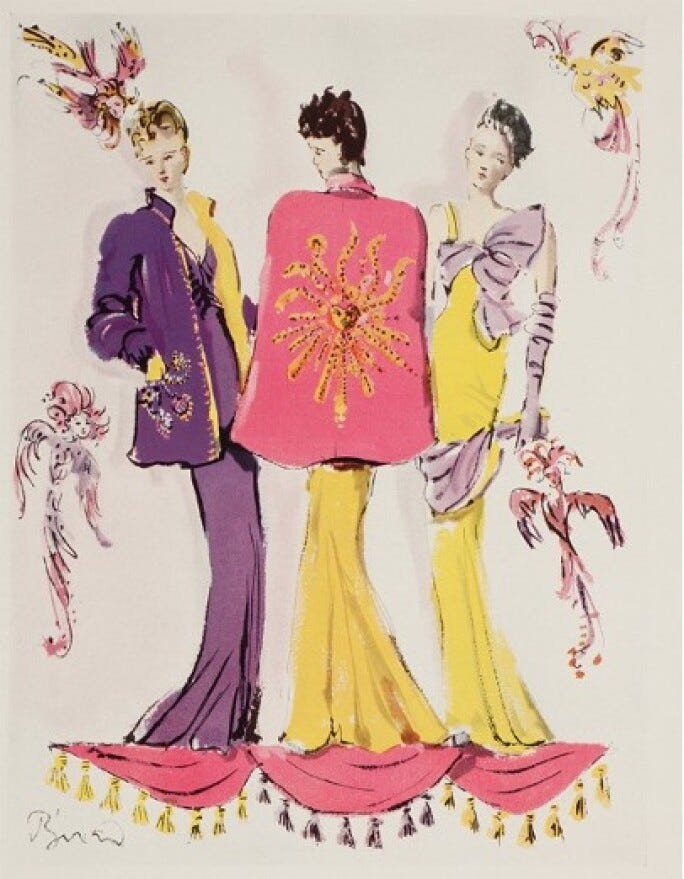
It was at her exhibition at the V&A — Schiaparelli: Fashion Becomes Art — that I stood in front of it. I kept walking and saw the beautiful embroidered jackets with illustrations by Jean Cocteau, and I was in total admiration of what a trailblazer she was, collaborating with some of the most forward thinking artists of her time. The craftmanship is something you can feel without even touching it.


When I left I felt inspired by her and wanted to tell more about her story. Beauty is necessary for a full life. And those that bring beauty to life should be celebrated.
That’s when I thought, how did she get there? Who not only inspired but helped her along the way? I thought, if I had her talent, how would I be able to display it? I thought about all of the young talent today that is trying to disrupt and because of an economic or an education constraint they cannot.
Elsa Schiaparelli was born in 1890 inside the Palazzo Corsini in Rome. Her father was the director of the Lincei library, a professor of Oriental literature. Her mother descended from the Medicis. She grew up inside a world of extraordinary intellect and completely suffocating expectation. As a child, she felt so invisible that she recalled planting flower seeds in her ears and throat. She wanted, desperately, to bloom into something beautiful.
She studied philosophy and wrote poetry that was way too controversial for her time. Verses about love and the body and desire that her conservative family considered scandalous.
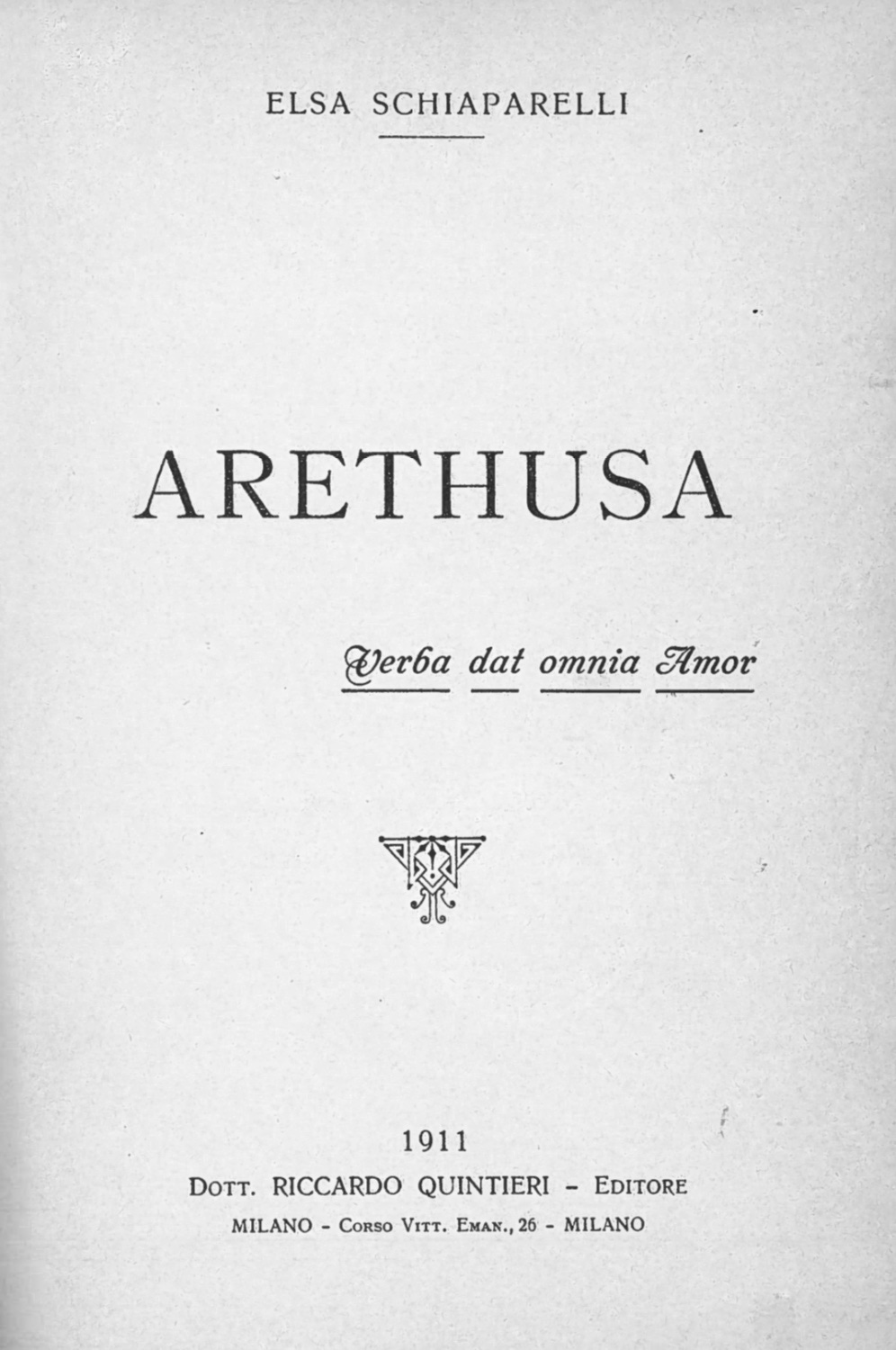
When they discovered the collection, titled Arethusa after the Greek nymph who fled pursuit by transforming herself entirely, they sent her to a convent in Switzerland. She went on hunger strike until they let her leave. When they arranged a marriage to a Russian nobleman, she said no and departed for London with almost nothing.
Later in Paris, broke and alone with a young daughter after a failed marriage, she met Paul Poiret. He was known in America as the King of Fashion and in Paris simply as Le Magnifique: the man who had liberated women from the corset, brought color and surrealism and the arts into clothing. She later described him as “a generous mentor, a dear friend.” He lent her his clothes to wear into Paris society, taught her to drape fabric directly on the body, and encouraged her to open her own house. What he gave her was not money, but belief in her talent.
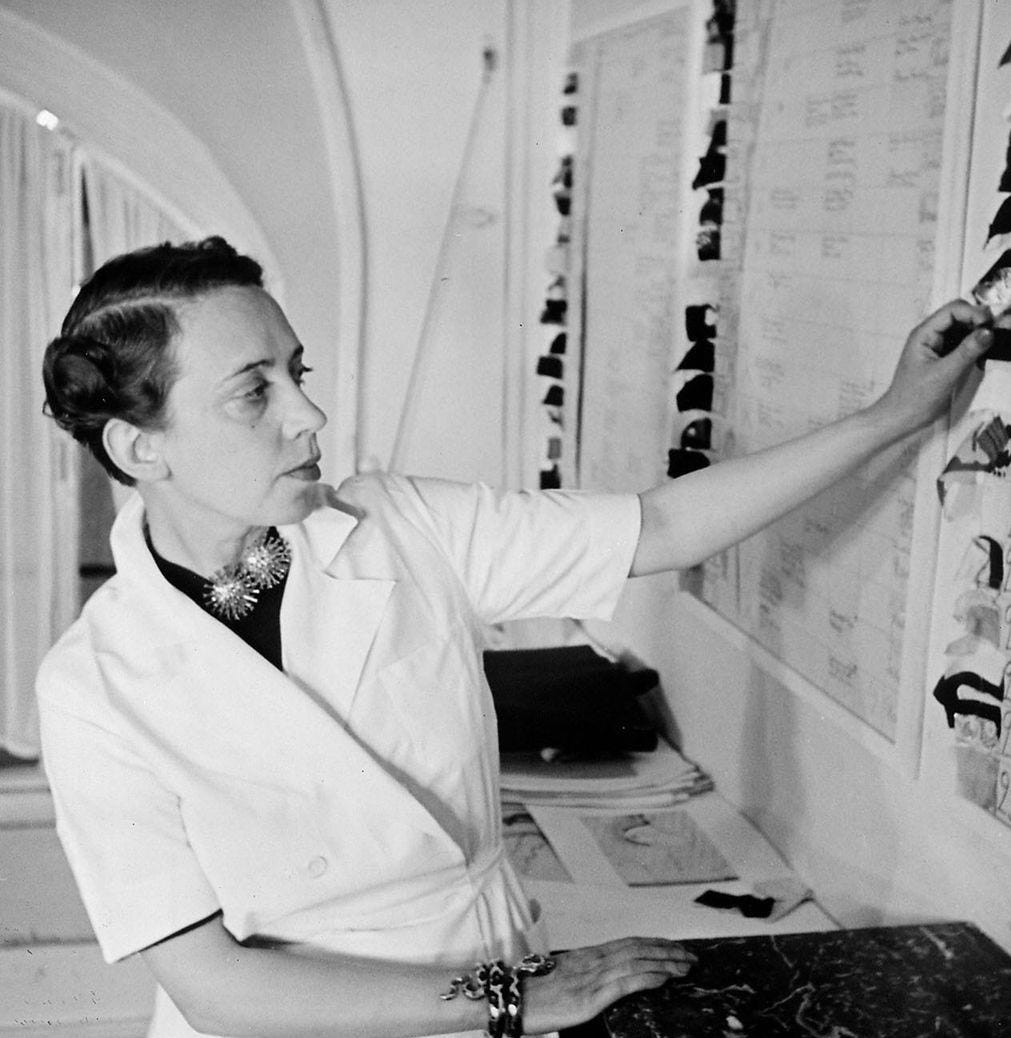
Elsa’s first collection was hand-knitted sweaters. A trompe l’oeil bow-knot on black and white wool, made with a special double-layered stitch developed by Armenian refugee craftswomen. American Vogue called it an artistic masterpiece. Orders came immediately, from both sides of the Atlantic. A man named Charles Kahn, co-director of the Galeries Lafayette department store, saw what was happening and offered to back her. He became her business partner and provided the capital to move from her apartment to a proper atelier at 4 rue de la Paix. It was a pragmatic arrangement: a commercial man who recognized that beauty could also be a business. By 1932 she employed four hundred people. The girl who had planted seeds in her throat had built a house.
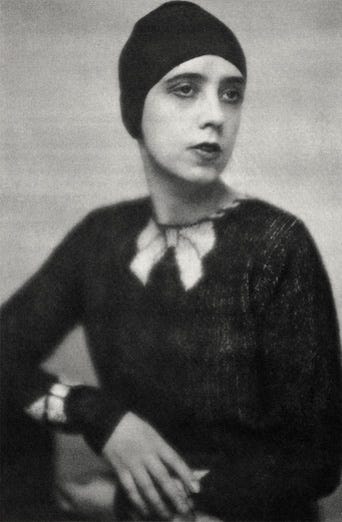
What I find myself thinking about is not the talent that was always there, waiting. It is the chain of belief that made it visible. A fellow designer who lent her a dress. A department store man who understood that beauty could also be a business. These are two different kinds of capital, arriving just in time.
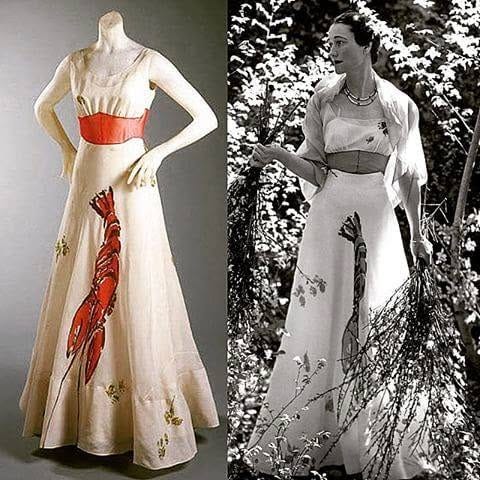
We don’t often think about this. We see the gold hood and we feel the genius and we leave it at that. But genius needs a structure to stand in. Poiret gave her confidence and Kahn gave her an atelier. Without the atelier there is no Cocteau, no Dalí, no lobster dress… and no hood.
The war came in 1939 and her clients dispersed, her Paris salon was seized by the German administration and placed under occupation authority. She spent the war years in New York, lecturing across thirty cities, trying to keep the idea of French couture alive from a distance. When she returned to Paris in 1945, she found a city that wanted to forget. Women had moved on to Christian Dior’s New Look, a vision of femininity that turned away from irony and surrealism and demanded something simpler. Elsa could not follow them there. In 1954, she closed the house. The dormancy that followed lasted nearly sixty years.
In 2007, Diego Della Valle, Italian billionaire and chairman of Tod’s Group, quietly acquired the Schiaparelli name. He spent six years rebuilding before selling a single piece. He refilled the salons with Art Deco and Surrealist artefacts, reconstructed the atelier, secured the craftspeople.
Then came four creative directors in six years. Christian Lacroix, Marco Zanini, Bertrand Guyon, each one a search for the house’s present feel. It found it in 2019 with Daniel Roseberry, a Texan with no formal couture training and no French, who understood something essential about Elsa that the others had not. By 2023 revenues had more than doubled. The losses narrowed.
The house still loses money. Della Valle has injected millions every year and has said openly that his world will be closer to culture than to crude business. Specifically, he injected €23 million in 2023 alone, against an €8 million operating loss. For nearly twenty years, he has meant it. But now the expansion begins: forty boutiques, ready-to-wear, North America, Asia.
This is the moment every vision backed by private capital eventually arrives at. The belief was real. But belief alone does not make a structure. And without the right structure, the soul follows. The houses that expanded too fast did not just lose money. They lost the thing that made people love them. The ones that held the line understood something simple: capital and soul are not opposites. One protects the other, if you build it right.
That is what is at stake in every decision Della Valle makes now.
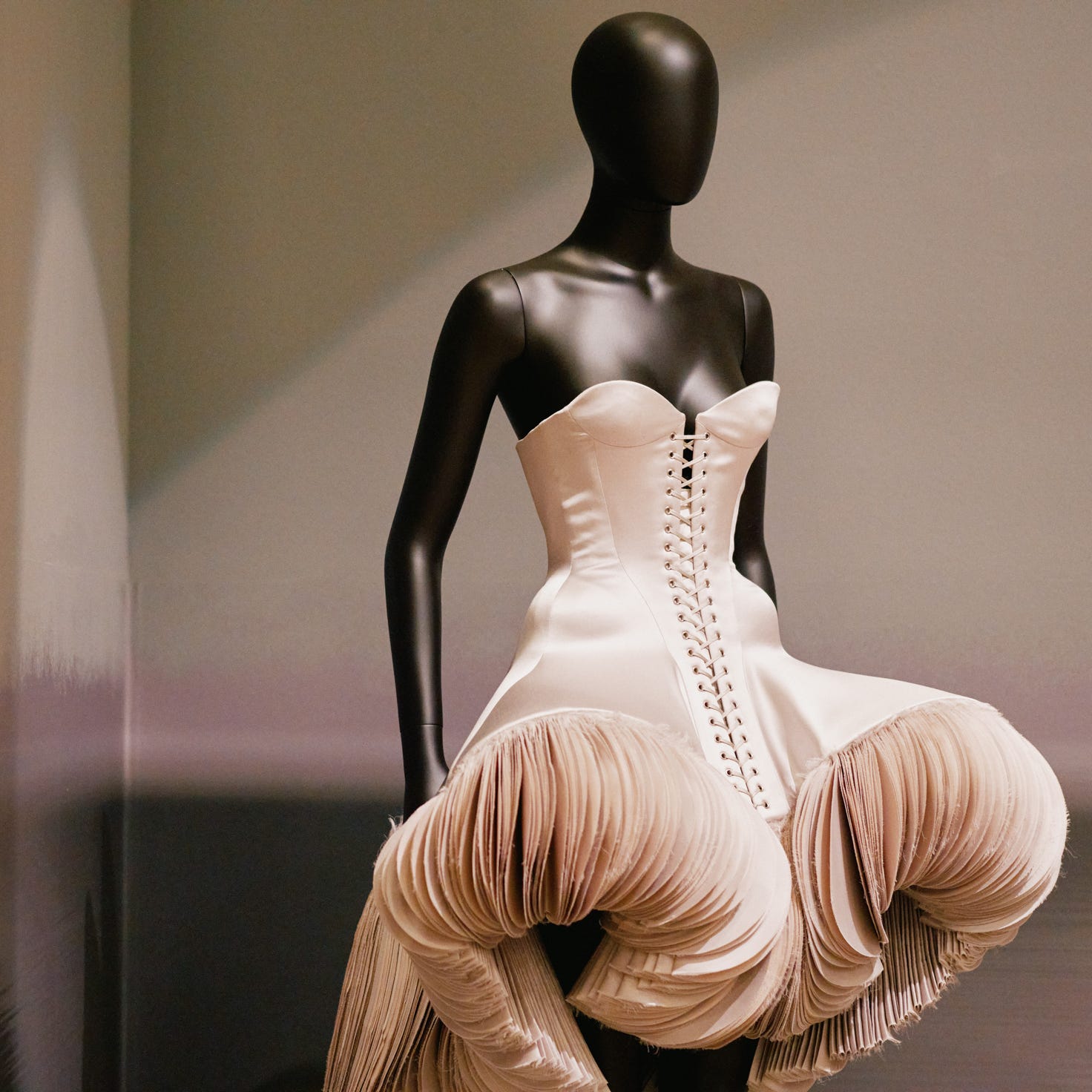
I think about the designers today who do not have a Poiret in their lives. The ones with the talent and the vision and no one in the room who has seen anything like them before. The gold hood exists because the right people built the right structures around a singular idea, at the right moment. That is what I want to shine a light to. Not just the object but the architecture that made it possible and the urgent question of who is building the right architecture today.